In a recent exchange, U.S. President Donald Trump publicly criticized Mexican President Claudia Sheinbaum for declining his proposal to deploy American troops into Mexico to combat drug cartels. Trump asserted that Sheinbaum’s refusal was due to fear of the cartels, stating, “She’s so afraid of the cartels she can’t walk… she can’t even think straight.”
President Sheinbaum confirmed that Trump had made the offer during a phone call in April, which she firmly rejected, emphasizing Mexico’s sovereignty.
She stated, “Sovereignty is not for sale,” and reiterated that while Mexico is open to collaboration, it will not permit foreign military presence on its soil.
The disagreement highlights ongoing tensions between the two nations regarding strategies to address drug trafficking and cartel violence.
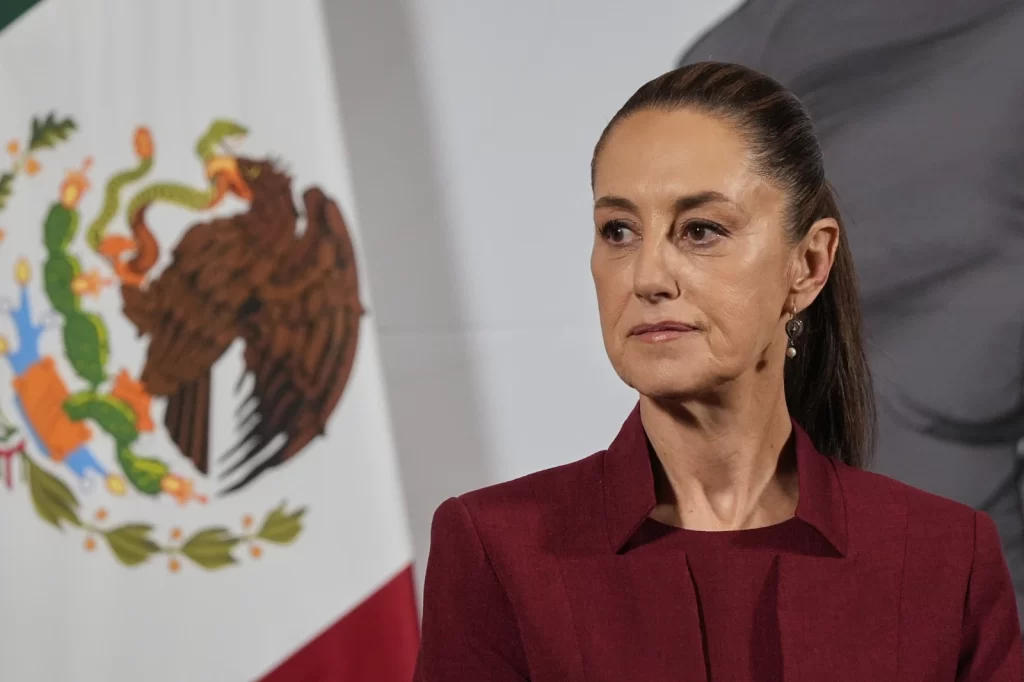
While the U.S. has designated several Mexican cartels as foreign terrorist organizations, Sheinbaum’s administration has focused on strengthening domestic law enforcement and intelligence efforts without external military involvement.
Despite the dispute, both leaders have maintained a relatively cordial relationship, with Sheinbaum avoiding direct confrontation in public statements. Analysts note that this approach aims to preserve bilateral cooperation on broader issues such as trade and migration.
The situation underscores the complexities of U.S.-Mexico relations, particularly in balancing collaborative efforts against drug cartels with respect for national sovereignty. As both countries continue to navigate these challenges, the emphasis remains on diplomatic engagement and mutual respect.