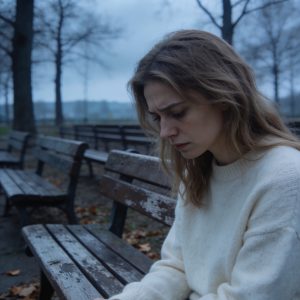
I bought the cliffside house in Porto Azul with the money I inherited after my husband, Martín, passed away.
It wasn’t reckless. I sold the apartment that felt too large, too loud, too full of memories that no longer belonged to me, and traded it for wind, salt air, and a balcony that looked straight into the Atlantic. The house was modest, whitewashed, perched just above the rocks like it was holding its breath.
For months, I worked quietly. I painted walls, polished old tiles, planted lavender along the path, and mended broken shutters with my own hands. Every evening I sat on the terrace listening to the waves and felt something I hadn’t felt in years—stillness.
Then the phone rang.
“Mom, it’s Ana,” my daughter said, cheerful in that hurried way people get when they’ve already decided for you. “We’ve been talking, and this summer we’re all coming—Pedro, the kids, and his parents too. The house is perfect for everyone.”
I looked out at the sea before answering.
“That sounds lovely,” I said evenly.
“Great! Oh—and since there are so many of us, you can take the small room at the back. The main bedroom works better for us with the children, you understand.”
You understand.
As if it were obvious that my own home would no longer be mine.
I smiled into the silence. “Of course. I’ll have everything ready.”
When I hung up, I stood alone in the living room—the place where I had finally learned to breathe again. Something inside me shifted, not into anger, but into resolve.
For three weeks I worked without stopping.
I moved furniture. Emptied closets. Repainted doors. Rearranged rooms so completely that the house barely resembled what I had built for myself. Each change felt like a quiet line being drawn.
When they finally arrived, the driveway filled with suitcases, laughter, and the sound of children running ahead.
“Mom!” Ana called, waving as she climbed the steps. “We can’t wait to see what you’ve done!”
I sat calmly on the porch until they reached the door. Then I opened it and stepped aside so they could enter first.
The laughter died in less than ten seconds.
Their faces froze.
Suitcases dropped.
Pedro went pale. Ana’s smile slid off her face.
Because every single room—including the back bedroom they had assigned me—had been transformed into something they never expected to see inside “my” house.
And in that instant, I knew they finally understood:
I hadn’t prepared this home for them.
I had prepared it for myself.
They stood frozen in the doorway as if the sea breeze had turned to stone around them.
Ana was the first to speak.
“Mom… what is this?”
I stepped inside behind them, calmly closing the door.
The house was still beautiful — but it no longer functioned like a family vacation home.
The former master bedroom was now my private studio. Easels, half-finished paintings, and large windows open to the ocean filled the space. The bed was gone. In its place stood a wide wooden worktable, covered in brushes, sketches, and dried paint. A single chaise lounge sat in the corner — my space, my rules.
The “small back bedroom” they had assigned me? It was no longer a bedroom at all. I had transformed it into a locked storage room containing my most precious belongings: my late husband’s books, letters, and personal artifacts — a sanctuary no one was allowed to touch.
The other rooms had also changed.
One bedroom had become a quiet reading lounge, lined with shelves from floor to ceiling. Another was now a meditation space with soft lighting and minimal furniture. Even the living room had been rearranged — no television, no large family table, just open space, plants, and a single comfortable chair facing the sea.
Pedro finally found his voice.
“Where… are we supposed to sleep?”
I folded my hands calmly.
“There are two guest rooms upstairs. They each have twin beds. That’s what the house offers now.”
Ana stared at me in disbelief.
“But we said we’d take the main suite!”
I smiled — gently, but firmly.
“And I said I would prepare the house. I did.”
Silence hung heavy in the air.
My grandchildren shifted uncomfortably, confused by the tension. Ana’s in-laws whispered among themselves, clearly judging me.
Then Ana snapped.
“You can’t just change everything! This was supposed to be a family summer!”
I looked at her directly.
“This is my home,” I said evenly. “Not a resort. Not your inheritance. Not your backup house. Mine.”
Her face reddened.
“So you did all this just to push us out?”
I shook my head slowly.
“I did this so I could finally live in peace.”
Pedro stepped forward.
“Mom, you’re being unreasonable. We came all this way.”
I opened the front door again, letting the sound of the waves rush in.
“You’re welcome to stay in the guest rooms,” I said calmly. “But if that doesn’t suit you, the town has plenty of hotels.”
Ana stared at me as if seeing me for the first time.
In that moment, she understood something irreversible:
I was no longer the woman who sacrificed everything for others.
I was the woman who chose herself — and would never give that up again.
They stayed…
But they never tried to take my house again.
And when they left at the end of summer, they left quietly, carefully, and with far more respect than they had ever shown me before.
Because they finally learned a truth they should have known all along:
A mother can love deeply —
and still refuse to be stepped on.
And this house by the sea?
It would always belong to me.